

The Empress, Rewritten
The case against Wu Zetian has become the foundation of her (somewhat) feminist revival

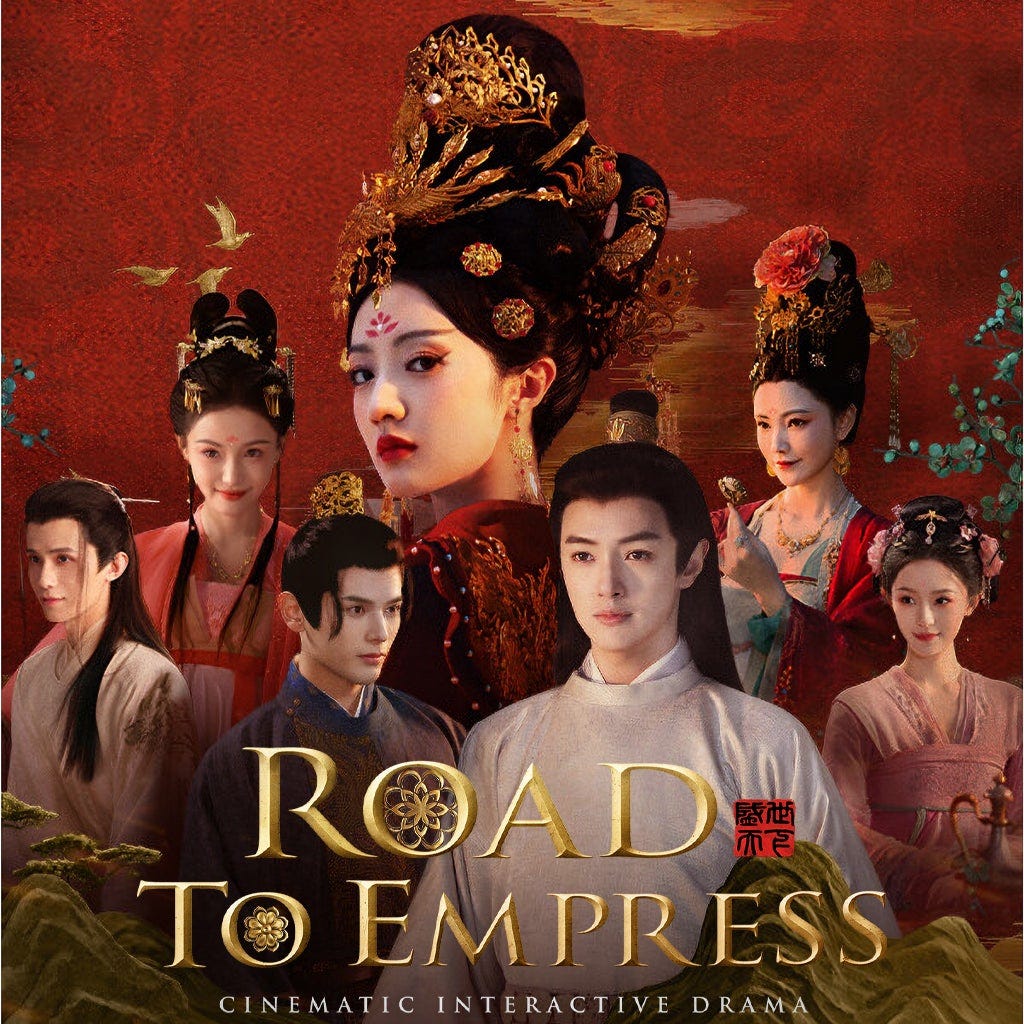
The image the studio chose to sell Road to Empress (《盛世天下》) shows the woman who becomes China’s only female emperor standing in a ring of the women who were once her rivals, documents scattered across the floor around her, beneath a line of Confucian text that suppressed womens’ rights. Forget virtue, forget vice, you answer only to yourself. It is a promise of release from a thousand years of judgment, and it has found a large and largely female audience, an interactive drama you play by reading a woman’s choices off the screen and choosing for her. The comment sections fill with women arguing about those choices.
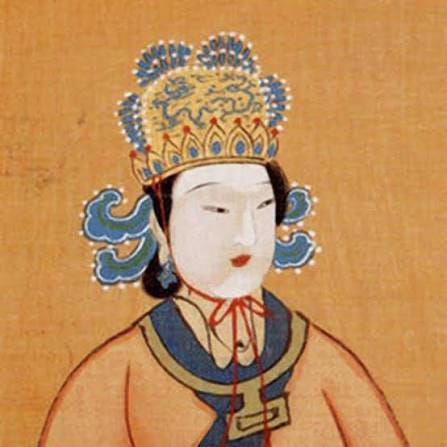
The figure they argue over has been judged longer than almost anyone in the Chinese past. Wu Zetian (武则天) took the throne in her own name in 690, founded a dynasty she called the Zhou, and ruled as emperor until 705, the only woman ever to do it. For most of the centuries since, the verdict on her was settled, and it was harsh. The game overturns that verdict. What it does not do, and what makes it worth watching closely, is change the evidence. It celebrates her using the same evidence, the same notorious episodes, that were once gathered to condemn her. The verdict is reversed. The case file is the same.
The same dossier
The case against Wu was first drafted while she was still alive. In 684, the year a failed uprising tried to unseat her, the poet Luo Binwang (骆宾王) wrote a denunciation on the rebels’ behalf, the 《讨武曌檄》, that set down most of the charges still in circulation: that she had clawed her way up from the bedchamber, schemed against her rivals, and seized what was not hers to take.
Over the following centuries the historians hardened this into doctrine. Meng Xianshi (孟宪实), describes three layers of writing about her. There is a traditional historiography, organized around the idea of 女祸, woman as the source of dynastic disaster, which treated her reign as a wound the Tang survived. There is a modern historiography that set out to rehabilitate her as a capable ruler. And there is a public historiography, the one that runs through television and now games, that takes whatever it needs from the other two. The 女祸 frame did the heaviest lifting for the longest time, and its assumption is built into the episodes that survive: a powerful woman is an anomaly that has to be explained, and the explanation is always her appetite, sexual or political.
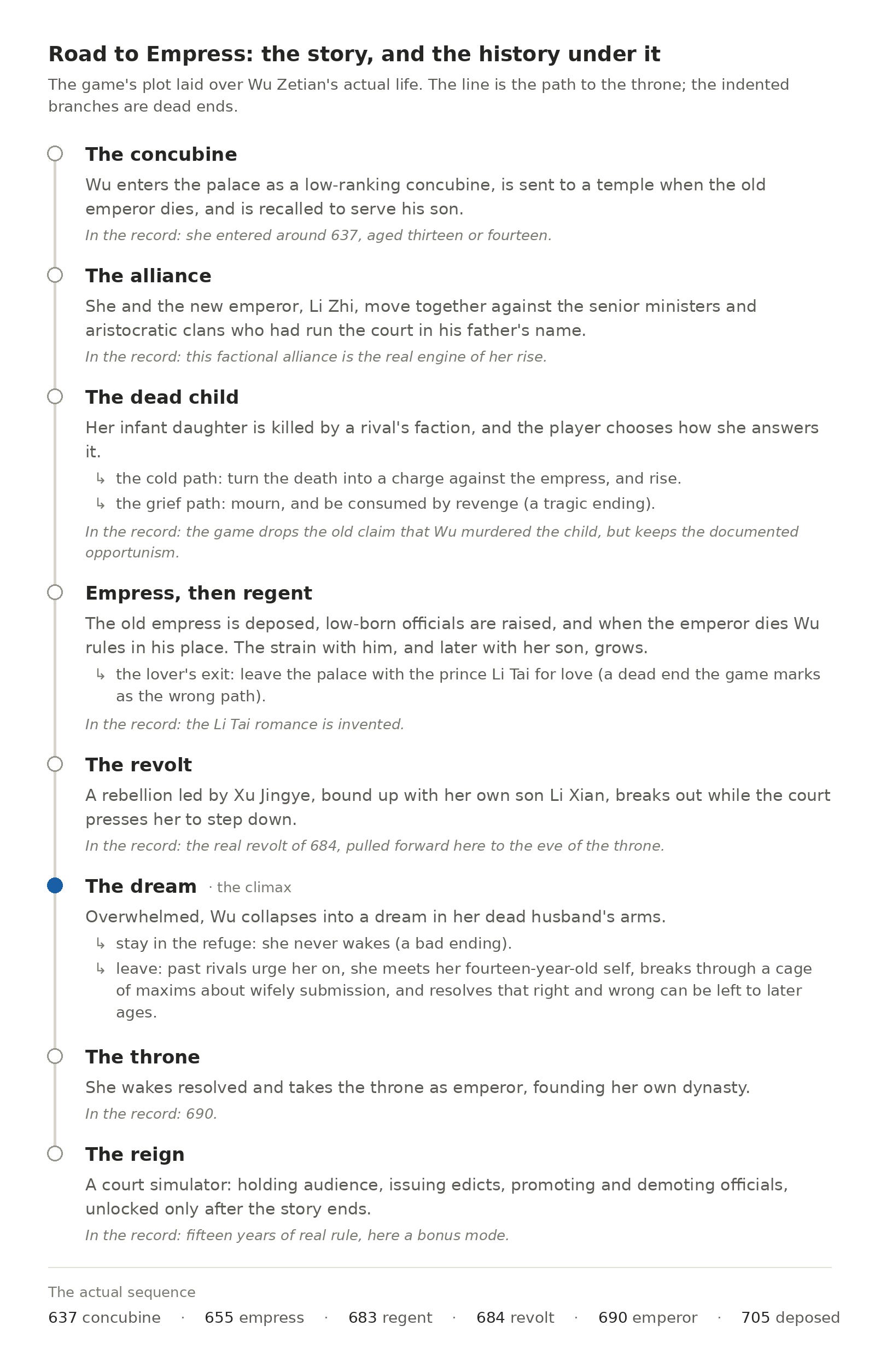
The clearest sign that the game inherits this dossier intact is the way it handles the most notorious charge, the death of Wu’s infant daughter. The old sources made this the founding atrocity of her career, the mother who strangled her own child to frame a rival. Meng treats the murder as a later embellishment. The earliest record, in the 唐会要, has the child simply die, with Wu seizing on the death to bring charges against Empress Wang, which is opportunism and not infanticide.
The game makes a telling choice. It drops the murder, and has the baby killed instead by the crown prince attached to Empress Wang’s faction. But the death still has to be put to use. The player is offered a cold path, on which Wu swallows her grief and turns the dead child into a weapon against the empress, which is the documented opportunism exactly, and a grieving path, on which the loss drives her into a vengeance that consumes her. The one version the careful historian defends is the version the game cannot stage: a death with no villain at all, a child who dies and a mother who turns it to account. The melodrama needs a murderer even where the history has none.
Surviving the palace
To play the game is to die, again and again. It belongs to a Chinese tradition of female-oriented interactive drama with roots in the 橙光 (Orange Light) platform, where a player steers a woman through a hostile court by choosing her words, and in Road to Empress most wrong words are fatal. Give the wrong answer to the wrong person and the screen tells you Wu is dead, and you reload.
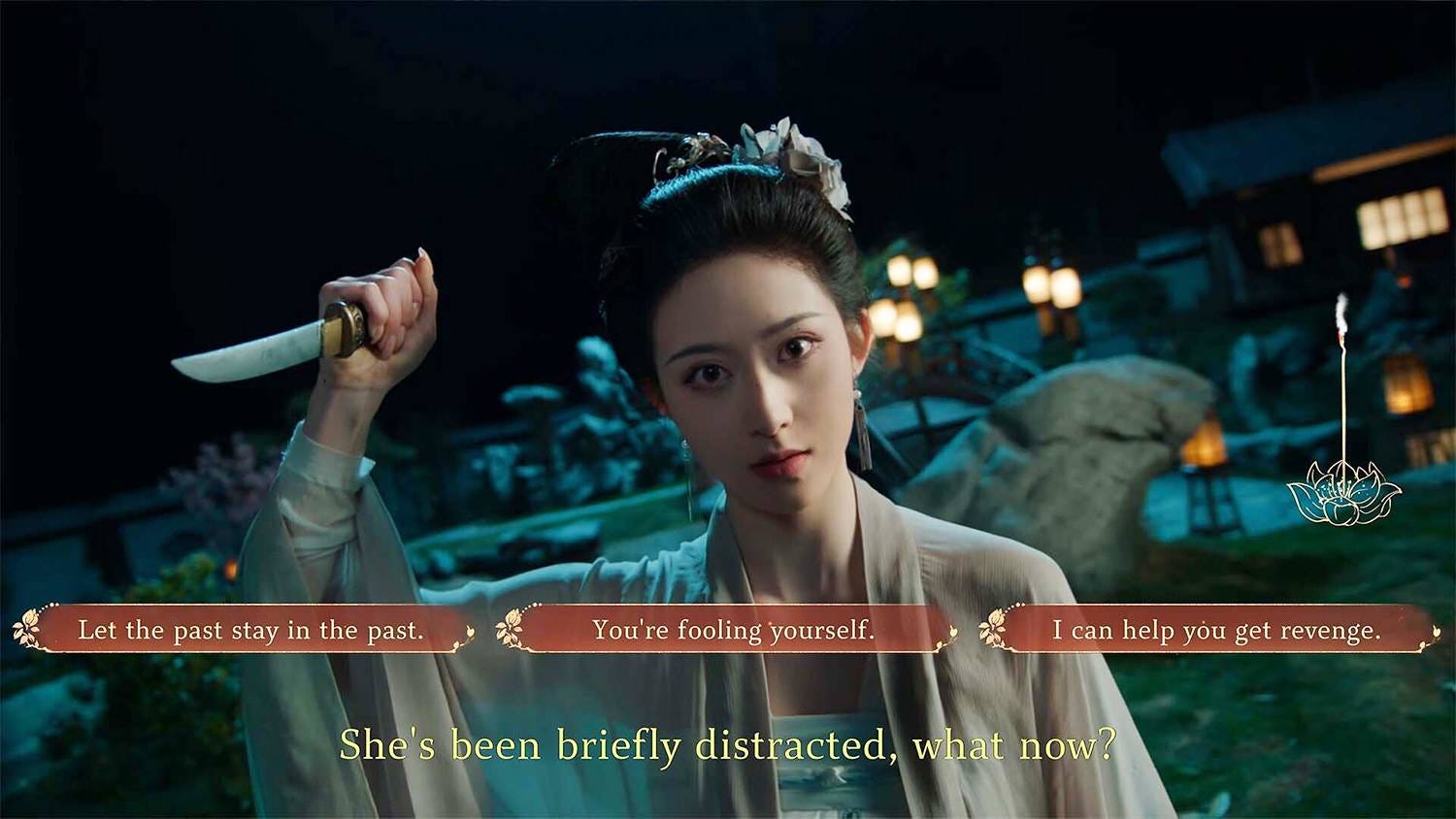
A critic in the Party newspaper Guangming Daily (光明日报), writing when the first part appeared, counted this against the game, arguing that its advertised hundred endings are really a hundred deaths, and that a story this punishing turns the promise of free choice into a guessing game with a single correct path. The complaint is fair as game design. But the same mechanic does something the complaint passes over. It puts the player, over and over, in the position the history describes, where a woman’s footing is never secure and one misjudged sentence can finish her. The deaths read as a fairly exact model of precarity.
This is also why the question of who the player becomes is more tangled than it first looks. Writing for the Shanghai outlet The Paper (澎湃), the critic Zhou Siyu (周思妤) argued that the game has you watch Wu rather than become her, observing her from outside instead of inhabiting her will. That holds for the cut-scenes, where Wu acts on her own. The death-and-reload loop pulls the other way. Each failed run teaches you what this court punishes, and the next run is a little more careful and a little more ruthless, until you have absorbed the same lessons Wu had to learn. You watch her, and you are drilled in her education at the same time. The two motions are the halves of how the game works on you.
The freedom to lose
The sharpest fight around the game is about an ending in which Wu does not take the throne at all. The second part offers an alternative line of choice where she leaves the palace with Li Tai (李泰), a prince she barely meets in the historical record, to live free of the whole bloody contest. The studio made this branch a side story, short and unhappy (Li Tai would die except for one single set of limited choices) , and seeded the path with signals that choosing it is a mistake and that the player should go back and become emperor.
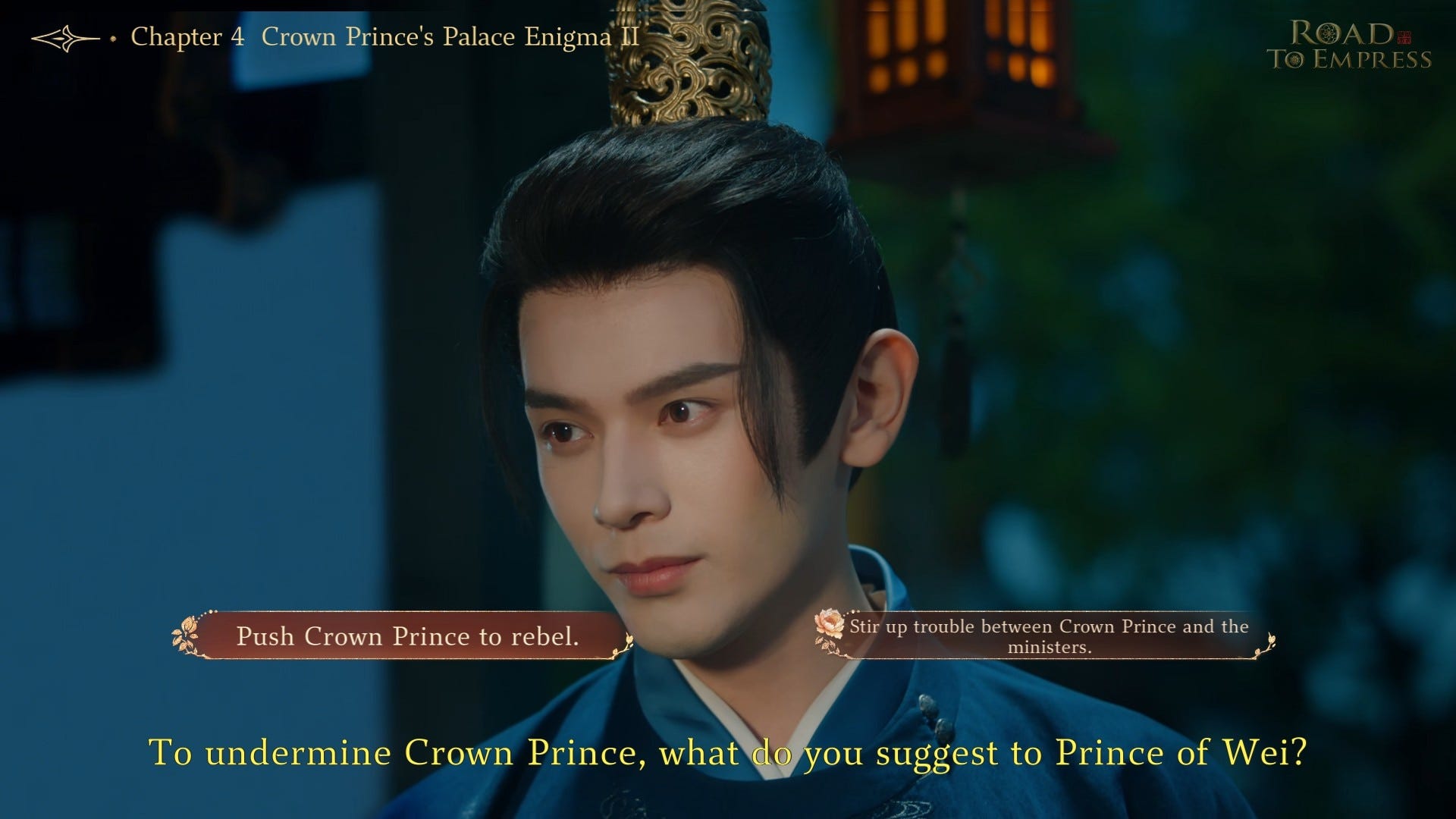
A critic had seen it coming. The same Guangming reviewer, writing about the first part, warned that the franchise looked to be building toward exactly such a line, a story in which Wu sheds her ambition and walks out with a lover in the name of freedom, and argued in advance that this would be a trap dressed as liberation. In an age when a woman could barely hold basic rights, the critic wrote, the climb to the top is the path that breaks the structure and opens a way for others, while the road back to the bedchamber is a return to dependence in the costume of choice. The point doubles as a description of the genre it sits inside. The 大女主, the big female lead, is the reigning template of Chinese popular drama, and as scholars including Yang Hui (杨慧) have argued, her ambition is forever routed back through love and betrayal, as though a woman reaches for power only after a man has failed her.
The charge is real, and it is too blunt for what the second part does. One player praised the game, with reason, for giving its women motives that are not romantic at all, for letting the consorts and dowagers scheme for their families and their own standing, not just for the emperor’s affection. The main line goes further and turns Wu’s central romance itself into a question of strategy, as I come to below. The climactic dream recasts the rival women as fellow prisoners of one system rather than villains. The game can imagine female ambition, and it can imagine the politics that ambition runs on. Whether it can hold that imagination to the end is the harder question.
What it cannot hold
Begin with what the game gets right, because it is more than the reviews allow. The main story of the second part is built on the real politics of Wu’s ascent. It frames her bond with the emperor Li Zhi (李治) as a working alliance, the two of them set against the senior ministers who had run the court in his father’s name, above all Zhangsun Wuji (长孙无忌) and the aristocratic Guanlong (关陇) bloc whose grip the deposed empress, herself a great-clan woman, embodied.
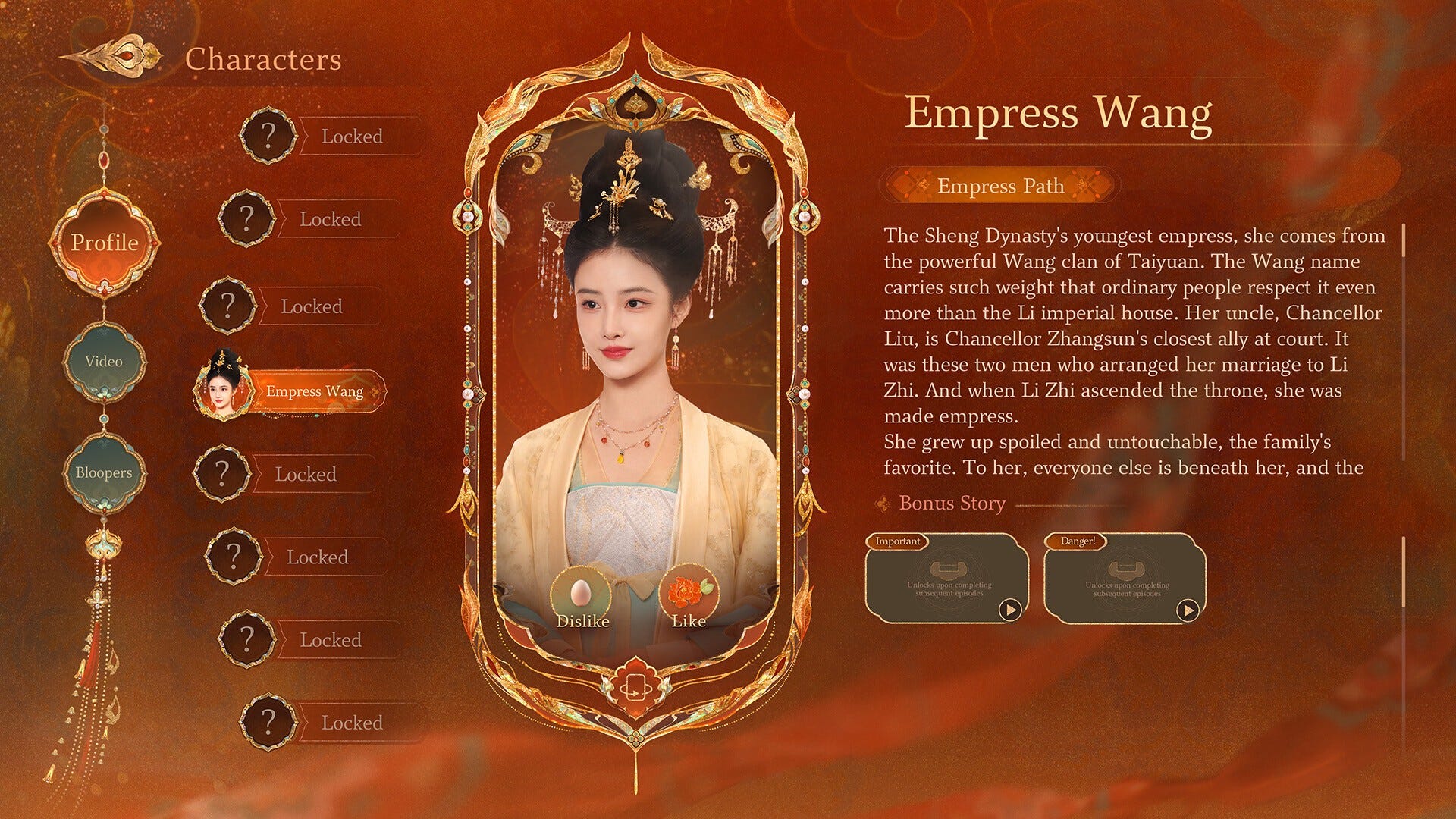
To break that grip they pull down the empress and raise low-born officials and the palace scholars of the Northern Gate, men who owe their place to the throne and nothing to the great families. This is, more or less, the mechanism the historians reconstruct, the early Tang state’s unusual institutional give worked by a sovereign who needed an ally the aristocracy could not absorb. The game even keeps the alliance morally open, pressing the player to decide whether Wu’s feeling for the emperor is love or leverage, and letting the strain between the two of them grow as her power does. A story could hardly lay out the political stakes of a woman’s rise more plainly.
And then it cannot hold them. As the reviewers who admired the game also record, the higher the story climbs the more the politics thins to a backdrop and the plot collapses into who feels what about whom. The court simulator that models rule in any detail, the memorials and edicts and the balancing of factions, sits outside the story altogether, unlocked only after the ending, and even there the rewards tip toward the gesture of command rather than the management of limits, an achievement for promoting or demoting nine officials at a stroke. The nearer the game comes to the summit, the less it trusts the politics it began with, and the more it reaches for the heart.
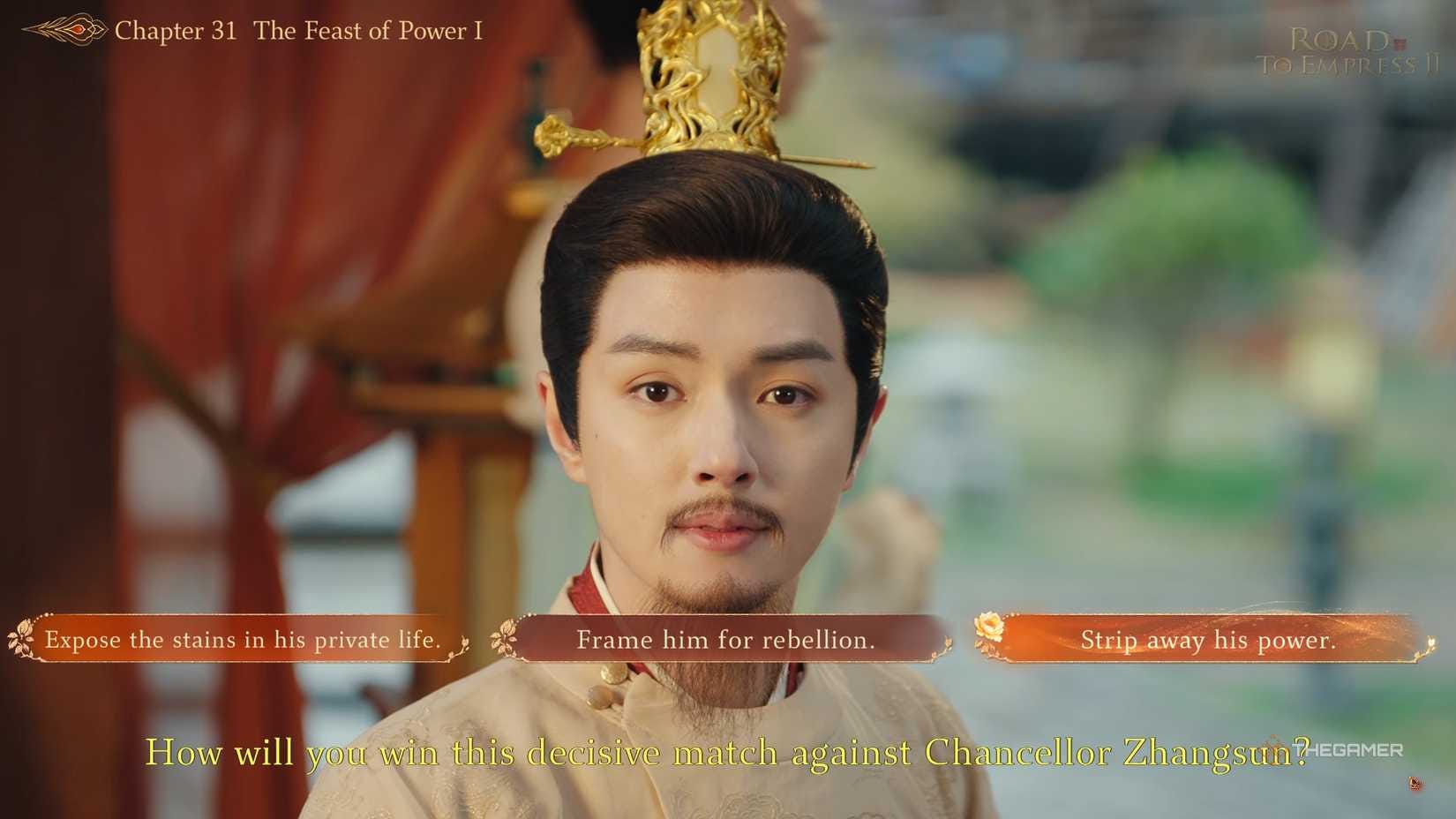
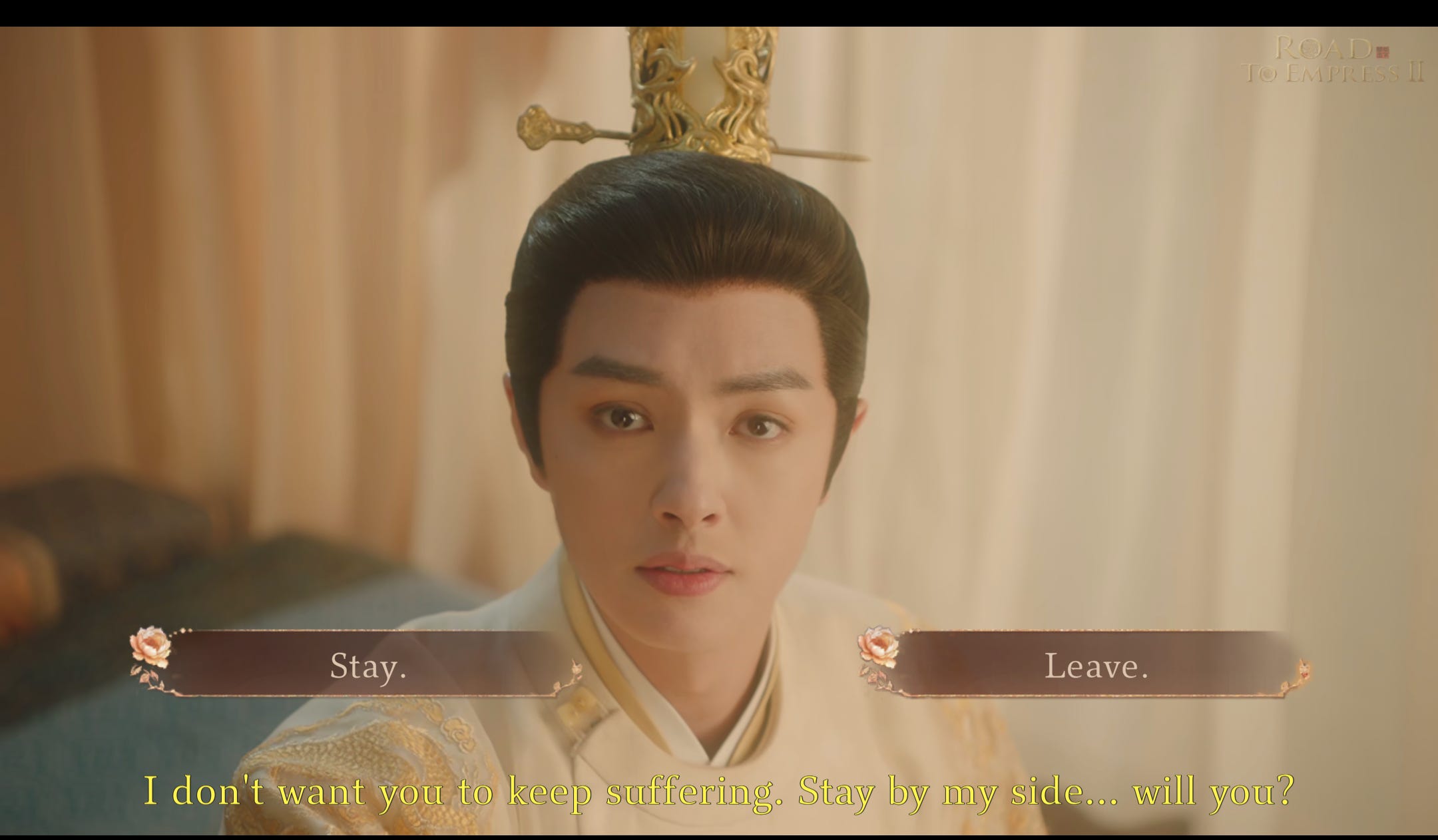
Nothing shows the retreat better than the climax. The studio pulls the revolt of 684 forward to the eve of the throne, the same uprising for which Luo Binwang wrote his denunciation, and binds it to Wu’s own son Li Xian (李显), so that the still uncrowned regent faces an army in the field, a son entangled with the rebels, and a court, her ministers among them, pressing her to step down. The game does let you make the political call, the decision on how to meet the revolt. But the decision is a branch. The sequence the game builds and lingers over is what happens when Wu collapses. She falls into a dream in the arms of her dead husband, in a tender refuge, and is asked whether she will stay.
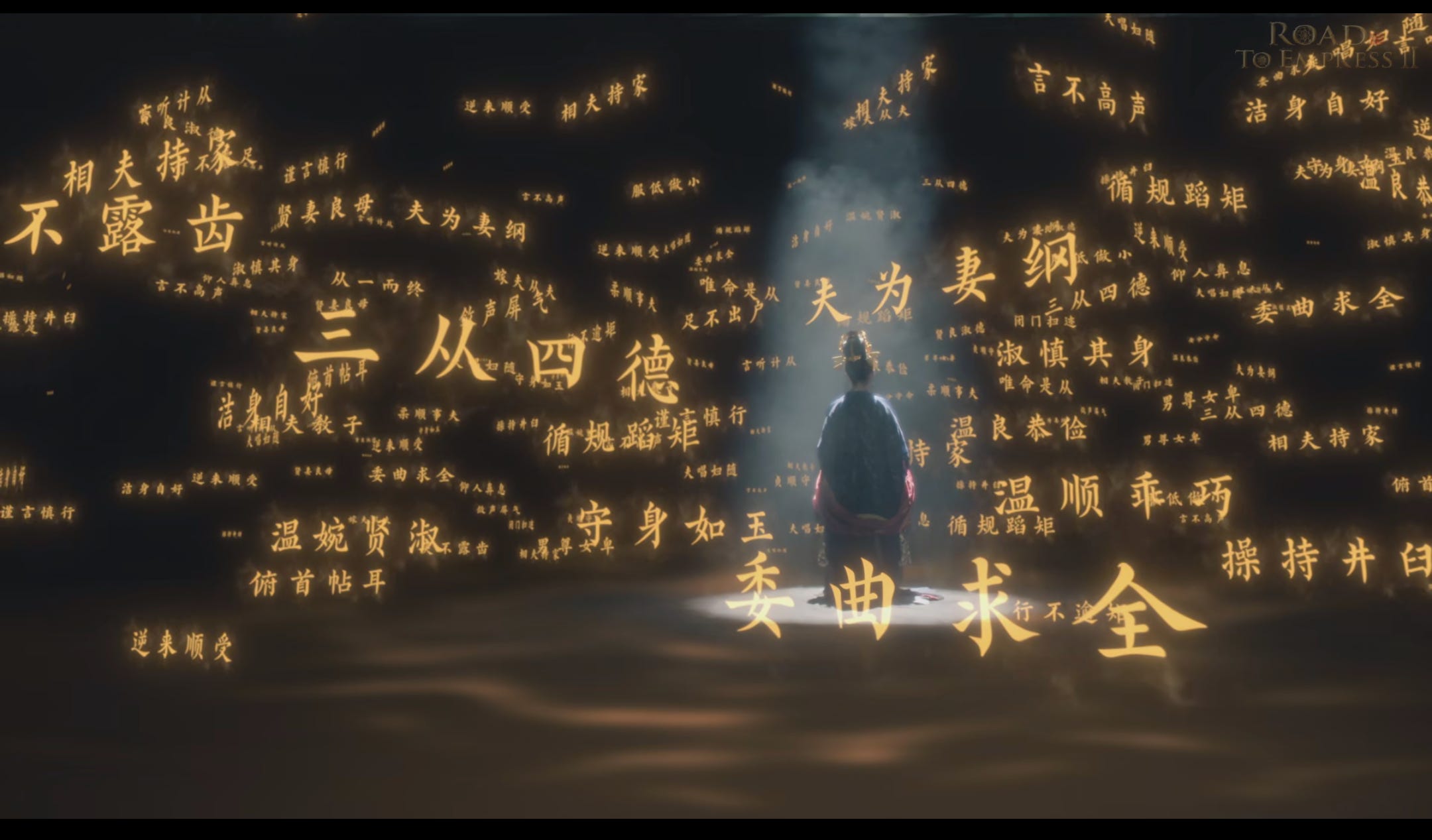
To stay is a bad ending, a sleep she never wakes from, so she leaves, and is drawn through a corridor of the women who were once her rivals, each now urging her to live and to break the cage for all women, until she reaches her own fourteen-year-old self at the gate where she first entered.
Around them the maxims of wifely submission hang in the air as walls of glowing characters, the husband the bond of the wife, the three obediences and the four virtues, men honored and women low, and her task is to break through them. She wakes resolved, on the creed the scene is built to deliver, that right and wrong can be left for later generations to judge, and goes on to take the throne. It is a powerful sequence, and it settles the decisive political moment of her rise inside her own head, as a question of will, while the politics that the will is for, the revolt to be put down and the throne to be made safe, waits outside the dream.
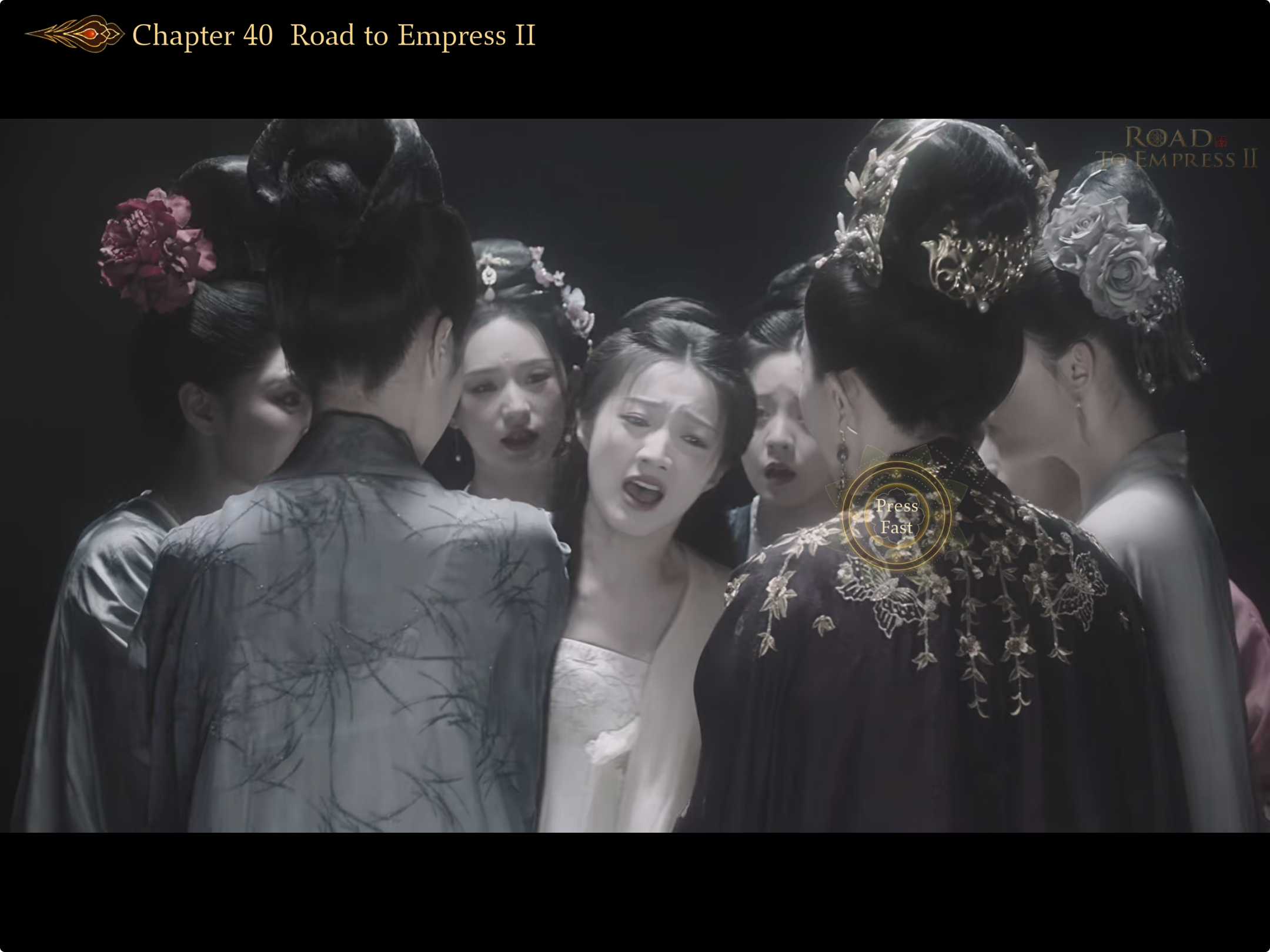
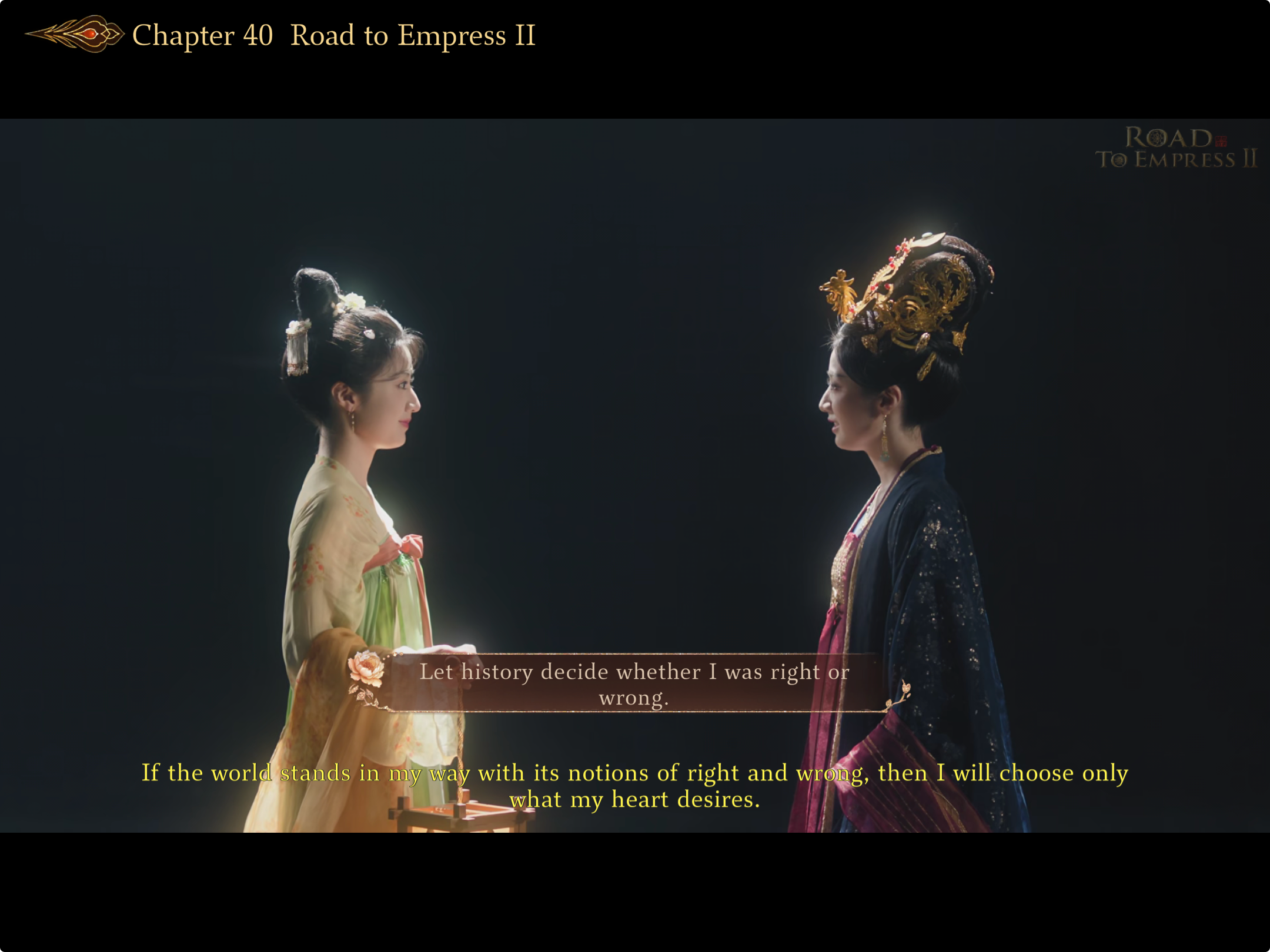
There is one more reason the celebration sits oddly on its subject. The historical Wu did not present herself as breaking the cage for all women. She legitimated her reign in the terms available to her, as a mother and as a sacred Buddhist sovereign, the holy parent of the realm, terms that made her rule thinkable in the seventh century precisely because they did not threaten the order the way a modern reading wants her to. As historians have long argued, reading her as a proto-feminist projects backward a politics she did not hold. The game is sincere in its projection, and the projection moves people. It remains a verdict laid over the case file, not a fact recovered from it.
Ending in stone
In 2013 a road crew outside Xi’an uncovered the tomb of Shangguan Wan’er (上官婉儿), the woman who served Wu as secretary and in effect as her minister of the brush. The epitaph cut into the stone gives a version of her career that the transmitted histories had flattened, with its own silences and its own interests, perhaps shaped by the princess who commissioned it. It is not the truth pulled clean from the ground. It is one more document, with one more agenda, added to the file. That is the condition of knowing Wu Zetian at all. There is no version of her beneath the writing, only writing, layered and contradictory, that each age sorts to fit its needs.
Road to Empress is the latest sorting, and its needs show in the fights it has set off. The loudest of these are not about how Wu governed. They are about which fate to wish on her. One camp, attached to the discarded romance with Li Tai, is furious that the game made the lover’s ending a dead end, and reads the forced march to the throne as the true prison, the studio denying the player any happiness that is not power.
Another camp wanted the crown all along and treats the romantic exit as a surrender. The Guangming critic calls the freedom to abdicate a tender cage; the heartbroken players call the denial of that freedom the real cage. Between them stands a third party, the keepers of the record, who insisted the game had to end with Wu on the throne because that is what happened, and who were told by players in turn to stop confusing a game with a history book. The studio, caught in the middle, made its own revealing compromise. It quietly turned the characters’ surnames into homophones, a move that let the game present itself as fiction rather than a claim about the real Wu Zetian, and it bent the story back to her documented end regardless.
What none of these parties is fighting about is the rule itself. The fans want her victorious or want her free; the keepers want her accurate. All of them are arguing over what she wanted and what she deserved, the questions of character and fate that the original dossier was built to answer in the negative and that the game answers in the positive. Even the politics the game does dramatize, the alliances and factions of her climb, is scaffolding that nobody quarrels over; the quarrel is about the ending. How she held the throne for fifteen years once she had it, the appointments and the administration and the management of a realm, sits where it has always sat, in the books and now a bonus simulator, drawing none of the heat.
The verdict has been overturned, loudly and with feeling, by a public that cares about Wu Zetian more than it has in a long time. The case file it argues over is the old one. And the rule she is celebrated for remains the one part of her the celebration never quite manages to show.